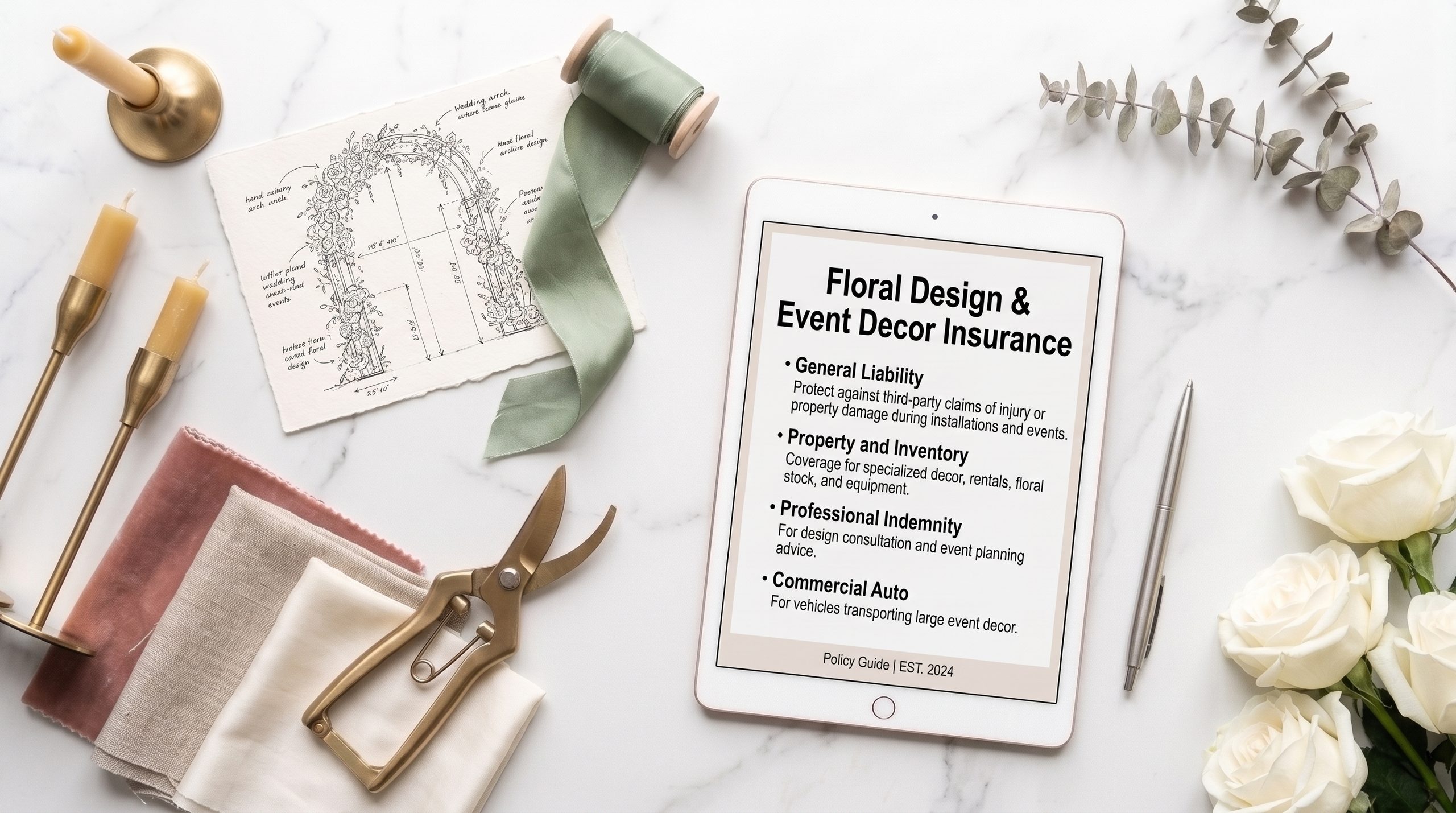
Plenty of florists don’t stop at bouquets and centrepieces. Once you’re building suspended installations, styling entire ceremony backdrops, sourcing candles and drapery, or renting in furniture and signage, you’ve quietly moved from “florist” into “event decor provider” — and that shift changes your risk profile more than it might seem.
Why Decor Work Raises the Stakes
Standard floral design carries real but fairly contained risks: a vase breaks, a bouquet causes an allergic reaction. Decor and styling work introduces a wider, physically riskier set of exposures:
- Suspended installations — floral arches, hanging arrangements, and ceiling-mounted pieces that can fall and cause serious injury if not properly secured
- Candles and open flame — a common styling element that introduces fire risk to a venue in a way flowers alone never do
- Rented-in items — furniture, arches, signage, and drapery you don’t own but are responsible for while it’s in your care
- Larger physical footprint — ladders, rigging, and installation equipment used to transform entire spaces, not just deliver arrangements to a table
Venues take this seriously because you’re not just supplying an accessory to their space — you’re physically altering it, sometimes suspending weight above guests’ heads.
The Coverage Gaps Floral-Only Policies Often Miss
Higher general liability limits
A standard florist GL policy sized for bouquet delivery and table centrepieces may not reflect the increased injury risk of installation work. Venues that host large-scale decor setups often expect higher limits than they’d require of a florist doing table arrangements alone — confirm your limit still meets the venue’s threshold once decor work is part of the job.
Bailee or rented equipment coverage
If you rent in arches, furniture, or signage rather than owning it outright, your standard equipment cover likely won’t protect items that aren’t yours. Bailee’s coverage (sometimes called “care, custody, and control” coverage) specifically protects other people’s property while it’s in your possession — the gap a florist-only policy typically doesn’t fill.
Professional liability for design consulting
If you’re contractually responsible for the overall look of an event — not just delivering flowers, but styling the full aesthetic — professional liability (errors and omissions) coverage becomes more relevant. This protects you if a couple claims the finished result didn’t match what was agreed, a dispute that’s more likely to arise from styling work than from a straightforward floral order.
Fire-related exclusions
If candles are part of your decor offering, check your policy for how it treats fire-related claims specifically. Some general liability policies handle open-flame risk differently than standard property damage, and it’s worth confirming coverage explicitly rather than assuming candles fall under the same terms as a knocked-over vase.
What to Flag With Your Insurer
- Describe the full scope of your work, not just “florist” — mention installations, candles, rented décor, and any structural or suspended elements you regularly use.
- Ask specifically about bailee coverage if any part of your offering involves sourcing or renting items you don’t own.
- Confirm your liability limits against your largest venues’ requirements, not your average booking — decor work tends to attract the venues with the strictest insurance demands.
- Clarify whether professional liability is included or needs adding, particularly if you sign styling or design agreements separate from your floral order.
A Practical Way to Think About It
If your business card still says “florist” but your actual bookings increasingly involve arches, drapery, candles, and full-room styling, your insurance should describe what you do now — not what you did when you first got covered. Misclassifying your business with your insurer, even unintentionally, can mean a claim gets denied for falling outside what your policy was written to cover.
This article is for general informational purposes only and does not constitute insurance, legal, or financial advice. Insurance coverage, requirements, and costs vary by state, country, insurer, and individual business circumstances. Always confirm your specific coverage needs directly with a licensed insurance agent or broker before making a purchasing decision.
Leave a Reply