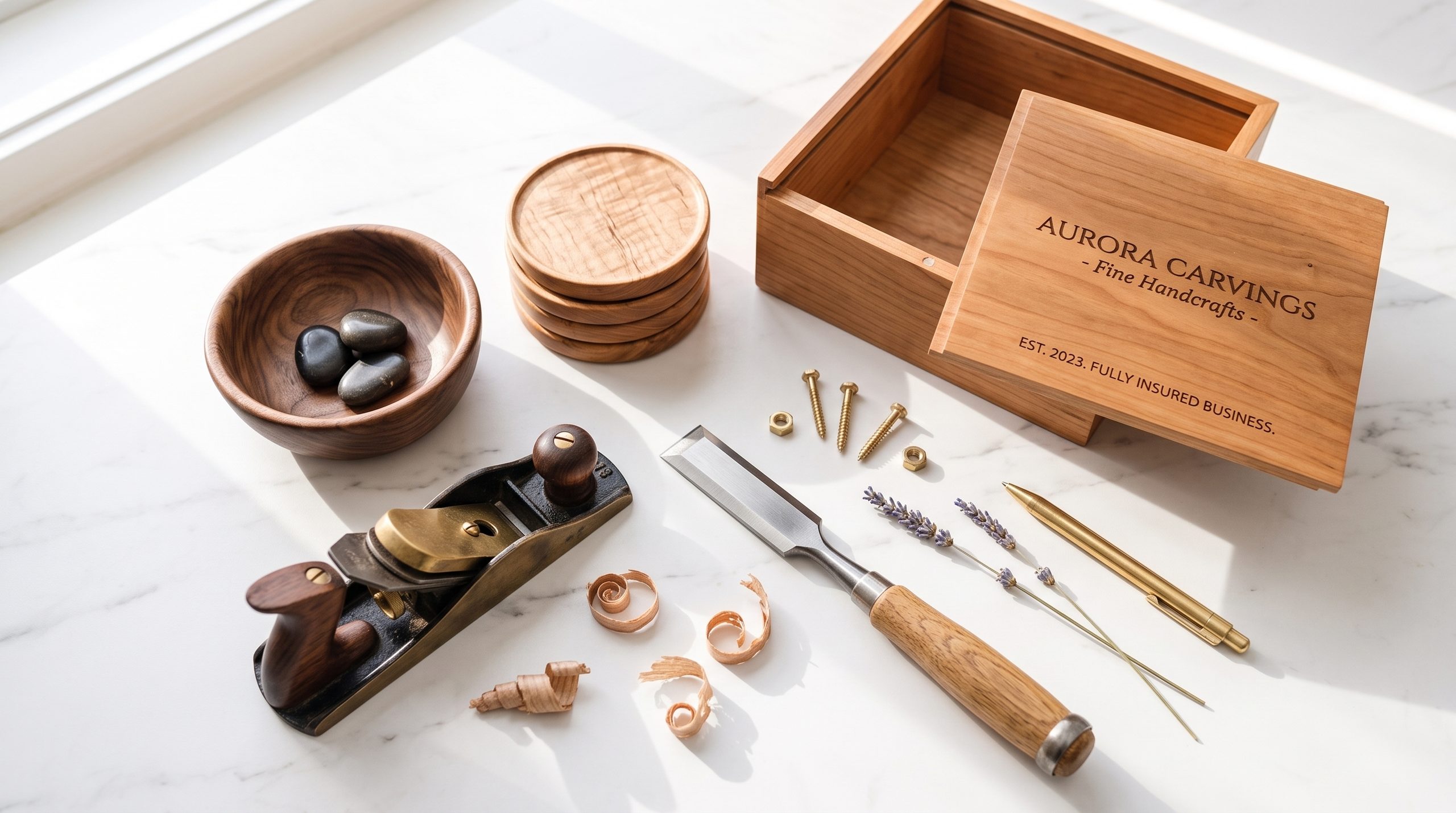
Woodworking spans a wide range of products — cutting boards, furniture, children’s toys, decorative items, tools and jigs sold to other makers — and the risk profile varies significantly depending on what you build and how it’s used. This guide covers what tends to matter most for insurance if you sell wood products online.
This article is for general information only and isn’t a substitute for advice from a licensed insurance agent. Coverage details vary by provider, product, and location — always confirm specifics before purchasing.
What drives risk in woodworking
- Structural failure, particularly relevant for furniture and load-bearing items (stools, shelves, chairs) where a construction flaw could cause a fall or injury
- Finish and treatment chemicals, since some wood finishes, stains, and sealants can cause skin or respiratory irritation, especially before fully cured
- Splinters and sharp edges, a lower-severity but common concern across almost all wood products
- Choking hazards, if you make children’s toys or items with small, detachable wooden pieces
- Food-safe finishing, specifically relevant for cutting boards, utensils, and other items that contact food
Product liability insurance for woodworkers
This covers claims that a piece you made caused injury or property damage after the sale — for example, a stool collapsing due to a joinery flaw, a splinter injury from inadequate sanding, or a reaction to a finish that wasn’t food-safe on an item intended for food contact. Risk scales with what you make: a seller of small decorative items carries different exposure than one making furniture meant to bear weight.
Furniture and load-bearing items: a category worth extra attention
If you make anything a person sits, stands, or leans on — stools, chairs, shelving, ladders, step stools — the potential severity of a claim is generally higher than with purely decorative items, since a structural failure can cause a real fall injury. This doesn’t mean you shouldn’t sell furniture, but it’s worth being deliberate about:
- Using joinery methods appropriate to the load the piece is meant to bear
- Being conservative about weight ratings you communicate to customers, rather than overstating capacity
- Keeping records of your construction methods, especially for pieces meant to hold significant weight
Cutting boards, utensils, and food-contact items
If any of your products contact food, using a genuinely food-safe finish (mineral oil, food-grade beeswax blends, or products specifically labeled and tested as food-safe) matters both for customer safety and for how a claim would be evaluated if a food-contact item caused illness. It’s worth confirming with your insurer whether food-contact items require any specific disclosure or are treated differently under your policy.
Children’s wooden toys
If you make toys, small wooden pieces (wheels, beads, small decorative elements) present a choking hazard that insurers and, in many countries, safety regulators treat seriously. It’s worth confirming with your provider that children’s toys aren’t excluded from your policy, and being conservative about age recommendations you list, since inaccurate age labeling can complicate a claim if a piece intended for older children ends up with a younger child.
General liability for woodworkers
Relevant if you sell at craft fairs or markets, or if customers visit a home workshop — for example, to pick up a custom order. Also worth considering if you do larger installations (built-in shelving, custom furniture delivery and assembly) that involve being in a customer’s home.
Frequently asked questions
Does insurance cost more for furniture than smaller wood items?
Often yes, given the higher potential severity if a structural piece fails compared to a decorative item — worth discussing appropriate coverage limits with a provider if furniture is a significant part of what you sell.
Do I need special coverage for wood toys specifically?
Not necessarily separate coverage, but it’s worth confirming children’s products aren’t excluded from your policy, since some general handmade policies treat this category differently or require it to be specifically included.
What if a customer damages a piece and then claims it was defective?
This is exactly the kind of situation where documentation helps — records of your construction and finishing process can support your position if a claim arises around whether an issue was a defect versus damage caused after the sale.
Does insurance cover a workshop injury to myself?
No — product and general liability insurance cover claims from other people (customers, visitors), not injuries to you as the business owner. Your own injury coverage would fall under a different type of policy, such as personal health insurance or, in some cases, workers’ compensation if applicable to your situation.
This article is for general informational purposes only and does not constitute insurance, legal, or financial advice. Insurance coverage, requirements, and costs vary by state, country, insurer, and individual business circumstances. Always confirm your specific coverage needs directly with a licensed insurance agent or broker before making a purchasing decision.
Leave a Reply