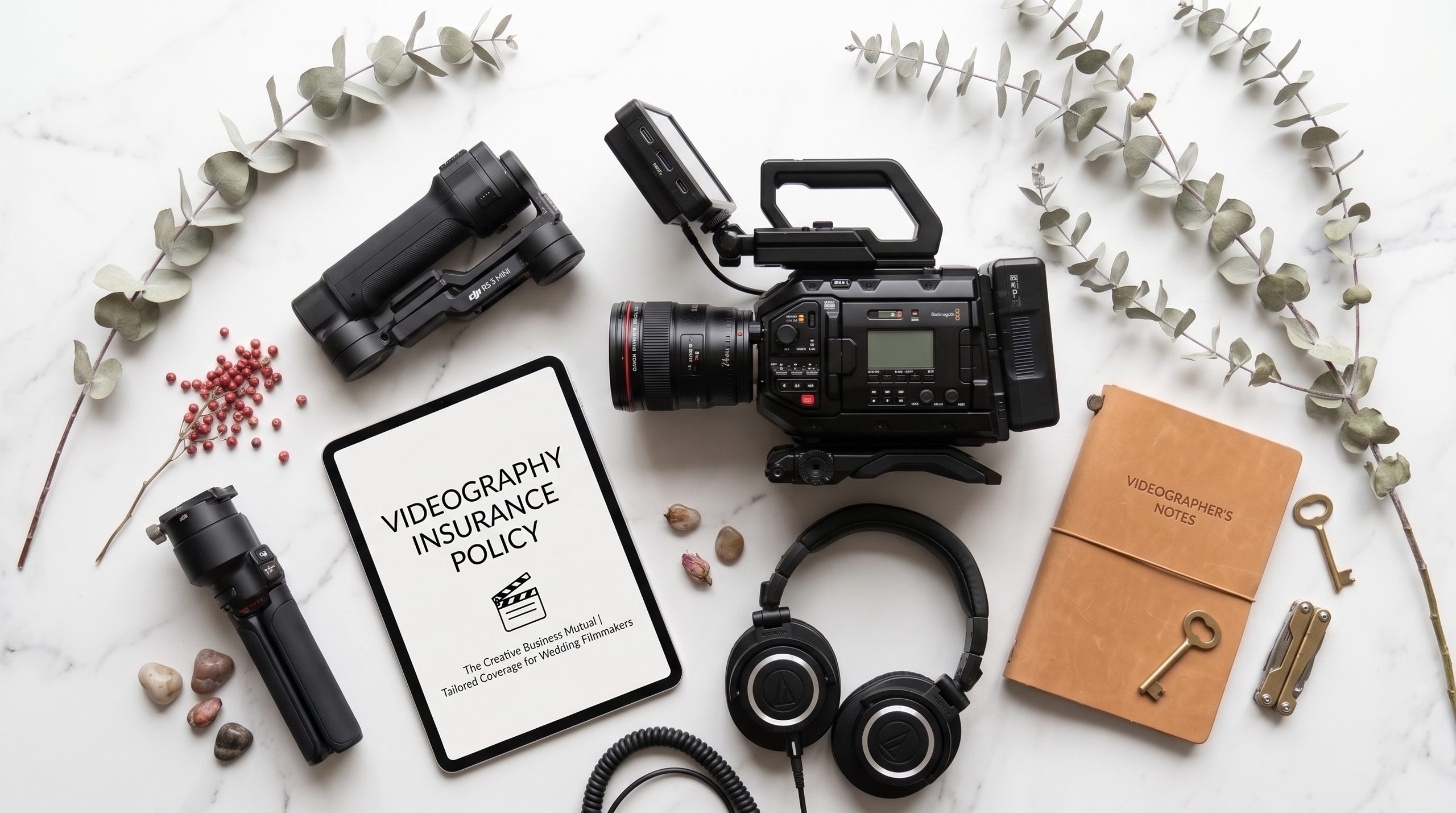
Wedding videography carries much of the same venue and equipment risk as photography, but with some differences worth calling out specifically — audio equipment, sometimes drone footage, longer time spent moving through the venue during the event, and a different kind of “irreplaceable” risk: lost or corrupted footage rather than a missed shot.
This article is for general information only and isn’t a substitute for advice from a licensed insurance agent. Requirements vary by venue, state, province, and country — always confirm specifics with your venue and a licensed provider.
The short answer
Similar to photographers, there’s no universal law requiring wedding videographers to carry insurance — but many venues require proof of liability coverage before allowing any vendor, videographers included, to work on-site. In practice, this makes insurance a standard cost of doing business for most working wedding videographers rather than a purely optional choice.
Why venues treat videographers the same as photographers
From a venue’s perspective, a videographer brings similar risk factors to a photographer: equipment set up throughout the space, movement around guests during the event, and gear that could cause injury or property damage if something goes wrong. Most venues that require a Certificate of Insurance from photographers apply the identical requirement to videographers — there’s rarely a meaningful distinction made between the two roles for insurance purposes.
General liability insurance for videographers
Covers third-party claims of injury or property damage connected to your work at the event — a tripod or light stand causing a fall, equipment damaging venue flooring, a cable creating a trip hazard in a walkway. This is what a venue’s Certificate of Insurance requirement is almost always asking about.
Equipment insurance for videographers
Videography equipment often represents an even larger investment than photography gear once you factor in cameras, multiple lenses, audio recording equipment (wireless mics, boom setups), lighting, gimbals or stabilizers, and drones if you offer aerial footage. Equipment coverage protects this gear against damage, theft, or loss — separate from liability coverage, which only responds to claims from other people.
Drone footage: a separate consideration
If you offer drone videography as part of your wedding packages, this typically requires its own layer of consideration beyond standard equipment and liability coverage:
- Many venues have specific rules — or outright bans — on drone use during events, separate from any insurance question
- Aviation regulations in most countries require drone operators to hold relevant certification (in the US, an FAA Part 107 certificate for commercial use, for example)
- Standard general liability policies may exclude aerial/drone-related claims, or require a specific drone liability endorsement — this is worth confirming directly with your provider if drone footage is part of your service
If you offer drone coverage, treat it as a distinct insurance conversation rather than assuming your standard photographer/videographer policy automatically extends to it.
Footage loss and data risk
This is one of the more distinctive risks for videographers compared to photographers: a wedding is unrepeatable, and lost, corrupted, or accidentally deleted footage represents real financial and reputational exposure, separate from liability or equipment insurance entirely. Standard business insurance generally doesn’t cover the “value” of lost footage itself — this risk is typically managed through operational practices rather than insurance:
- Redundant recording (dual card slots, backup cameras/audio recorders)
- Immediate on-site or same-day backup of footage to multiple locations
- Clear contract language addressing what happens (and what liability, if any, exists) in the rare event footage is lost
Some broader professional liability or errors & omissions policies may address certain failure-to-deliver scenarios, but this varies significantly by provider — worth a direct conversation if this is a specific concern for how you operate.
Second shooters, assistants, and audio operators
If you work with an assistant videographer, second camera operator, or dedicated audio person, clarify with your provider whether they’re covered under your policy or need separate coverage, and check whether the venue expects individual proof of insurance from each person working the event.
Frequently asked questions
Do venues distinguish between photographer and videographer insurance requirements?
Generally no — most venues apply the same liability insurance requirement to any vendor working on-site, regardless of whether they’re shooting photos, video, or both.
Does equipment insurance cover a drone specifically?
Not automatically in every policy — drones sometimes require a specific endorsement or separate coverage due to the different risk profile (aviation regulation, different liability exposure) compared to ground-based camera equipment. Confirm this specifically if drone work is part of your service.
Is lost wedding footage covered by insurance?
Not typically by standard liability or equipment insurance — those cover injury, property damage, and physical loss or damage to your gear, not the intangible value of footage itself. This risk is usually managed through backup practices and contract terms rather than an insurance policy.
Do I need a separate policy if I do both photography and videography at the same wedding?
Not necessarily — many providers offer combined photo/video coverage under a single policy, which can be simpler and more cost-effective than separate policies for each role. Worth asking specifically when getting quotes if you offer both services.
This article is for general informational purposes only and does not constitute insurance, legal, or financial advice. Insurance coverage, requirements, and costs vary by state, country, insurer, and individual business circumstances. Always confirm your specific coverage needs directly with a licensed insurance agent or broker before making a purchasing decision.
Leave a Reply