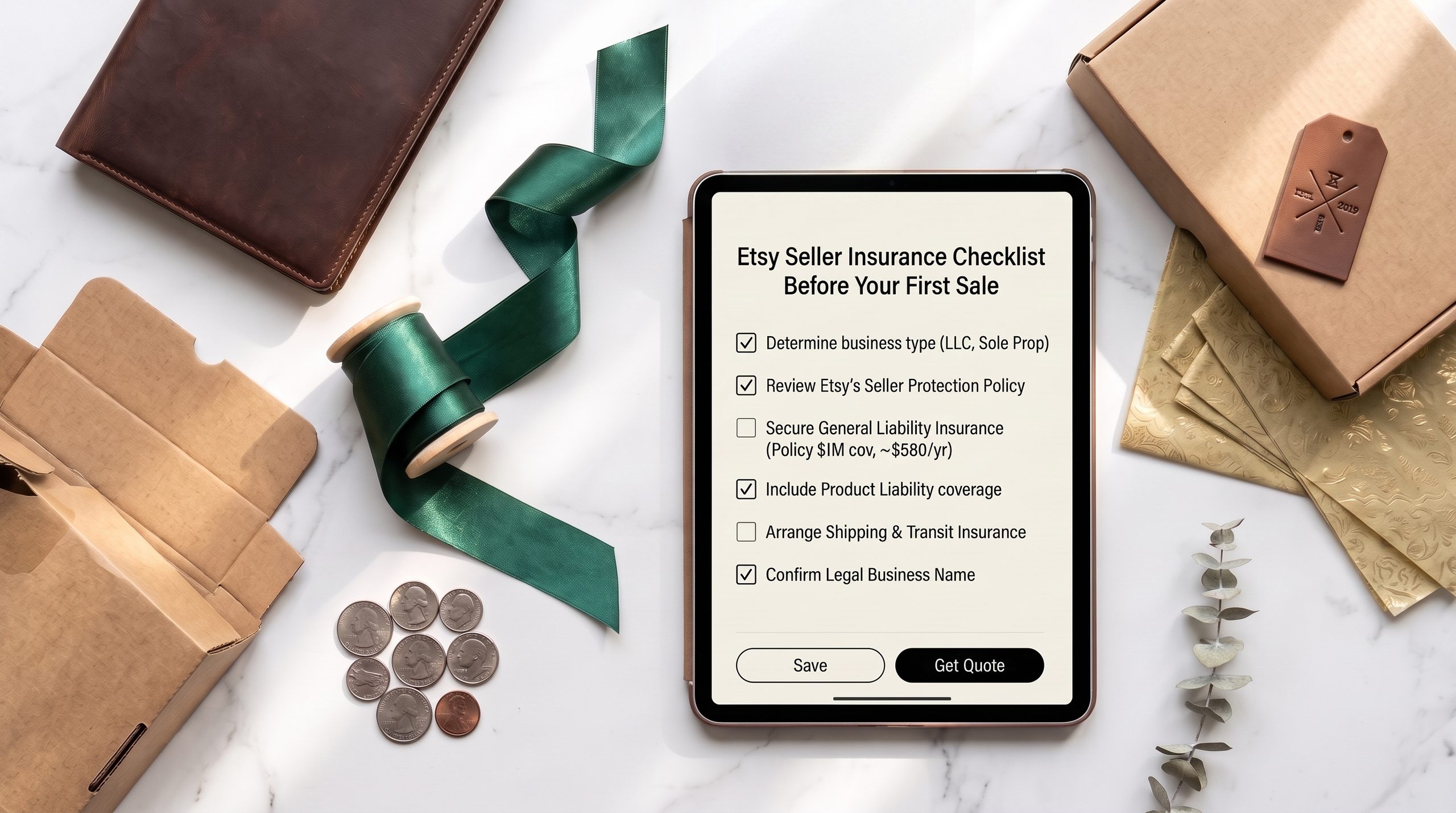
If you’re about to open your first Etsy shop, insurance is probably somewhere near the bottom of a long list of things to figure out. This checklist pulls together everything from our other guides into one practical sequence, so you can work through the insurance question once, before your first sale, instead of scrambling later.
This article is for general information only and isn’t a substitute for advice from a licensed insurance agent. Requirements vary by product, location, and how you sell — always confirm specifics with a provider before purchasing.
Step 1: Identify your product risk category
Before anything else, be honest about what you’re actually selling and where it falls on the risk spectrum:
- Lower risk: art prints, digital downloads, unaltered vintage items, stickers
- Medium risk: jewelry, clothing, accessories, ceramics, home decor
- Higher risk: candles, bath and body products, cosmetics, food items, children’s products
This isn’t about deciding whether to sell these things — it’s about knowing roughly where your insurance conversation needs to start.
Step 2: Decide between general liability and product liability (or both)
Match your situation to what you actually need:
- If you have any physical product that touches skin, gets used, worn, or consumed — product liability is relevant.
- If you plan to sell in person at any point (markets, fairs, pop-ups) — general liability is relevant.
- Most sellers with any physical product and any intention of selling in person eventually need both, so it’s worth checking whether a single bundled policy covers both from the start.
Step 3: Get quotes from at least two providers
Don’t buy from the first quote you see. Get quotes from two or three providers with the same details about your product category and estimated revenue, so you can actually compare price and included coverage rather than guessing. See our provider comparison guide for a starting list.
Step 4: Confirm what’s actually included
Before buying, confirm directly with the provider:
- Does this include both general liability and product liability?
- What’s the coverage limit per claim and per year?
- Can you issue a Certificate of Insurance if I need one later?
- Are there any product categories excluded from this policy?
- Is pricing monthly or does it require an annual payment upfront?
Step 5: Decide if you’re buying before or after your first sale
There’s no strict rule that says you must have insurance before your very first Etsy sale — plenty of sellers start selling and add coverage as their shop grows. What matters more is being intentional about the decision rather than never revisiting it. If your product category carries real injury risk (candles, cosmetics, children’s items), it’s worth having coverage in place from the start rather than waiting until after your first sizeable order.
Step 6: Set a reminder to review coverage as your shop grows
Insurance needs aren’t static. Revisit this checklist whenever:
- You add a new product line, especially one in a higher-risk category than what you currently sell
- Your revenue increases meaningfully
- You start selling in person for the first time
- You hire any help, even part-time
Step 7: Keep your proof of coverage accessible
Once you’re covered, save a digital copy of your policy documents and, if you have one, your Certificate of Insurance, somewhere easy to access. If a market or fair asks for proof unexpectedly, you don’t want to be searching for it at check-in.
Quick pre-launch checklist
- Identified your product risk category
- Decided whether you need general liability, product liability, or both
- Requested quotes from at least two providers
- Confirmed coverage limits and what’s excluded
- Confirmed whether the policy covers in-person selling if relevant
- Made a decision — bought coverage or consciously decided to wait
- Saved policy documents and COI somewhere accessible
Frequently asked questions
Do I legally need insurance before my first Etsy sale?
No — Etsy doesn’t require it, and there’s no general legal requirement to have insurance before making your first sale. The decision is about risk management, not a legal prerequisite.
Is it too early to get insurance if I’ve only made a few sales?
Not necessarily — coverage isn’t tied to sales volume in a way that makes early coverage “wasted.” If your product category carries meaningful risk, having coverage from an early stage simply means you’re protected from the start rather than retroactively.
What if I’m not sure how much revenue to estimate for a quote?
Give a realistic, honest estimate based on your actual plans rather than guessing high or low. Most providers let you adjust your policy later as your actual numbers become clearer.
Should I wait until I have an LLC before getting insurance?
No — you can typically get a policy as a sole proprietor. Forming an LLC is a separate decision about business structure and personal liability protection, not a prerequisite for buying insurance.
This article is for general informational purposes only and does not constitute insurance, legal, or financial advice. Insurance coverage, requirements, and costs vary by state, country, insurer, and individual business circumstances. Always confirm your specific coverage needs directly with a licensed insurance agent or broker before making a purchasing decision.
Leave a Reply