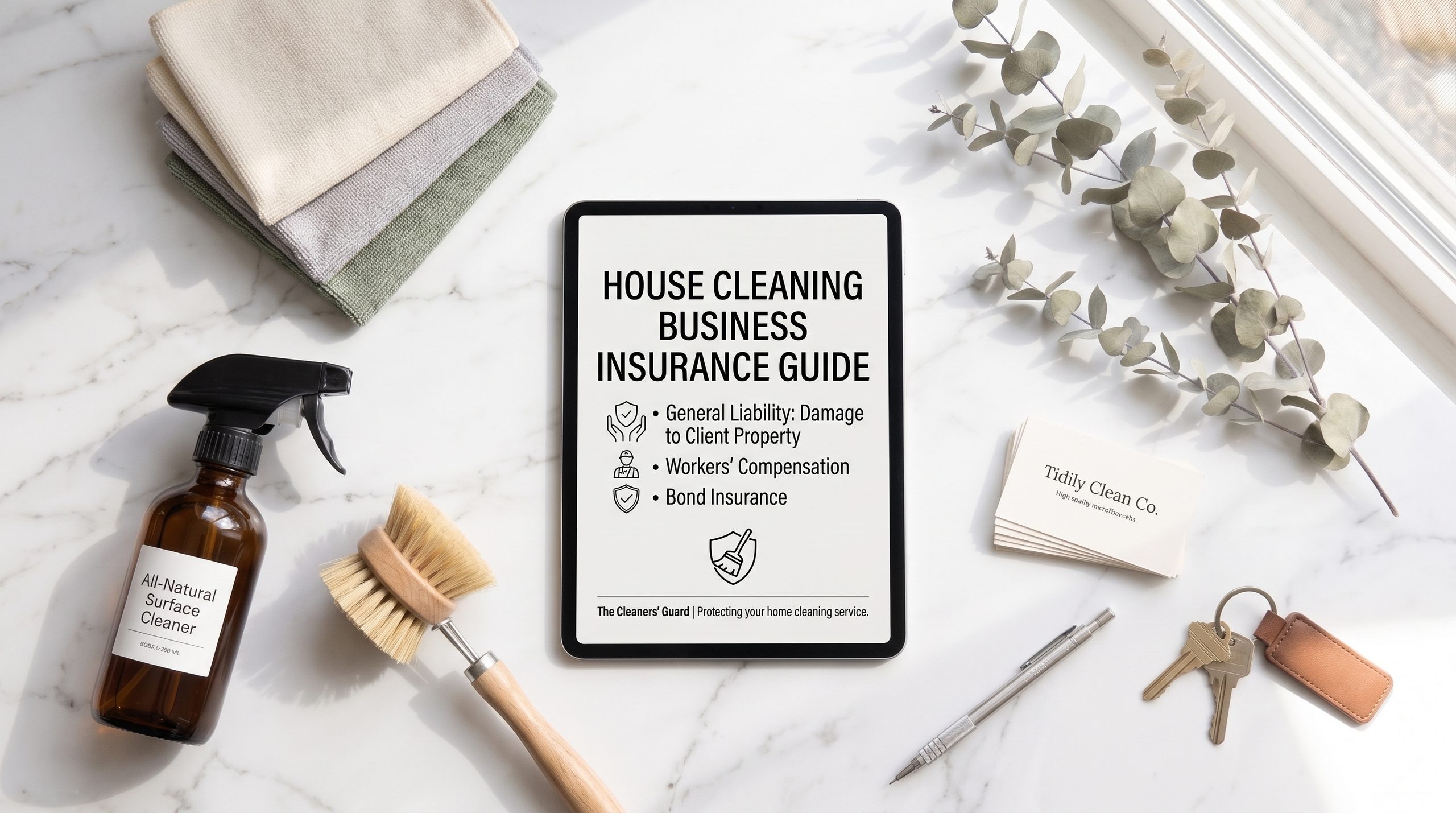
Cleaning businesses carry a specific kind of risk that’s easy to underestimate: you and your team spend your days inside other people’s homes, handling their keys, working around their belongings, and using chemicals that can cause real damage if something goes wrong. Here’s what actually needs covering, and what clients will expect to see proof of.
General Liability: The Starting Point
General liability insurance is the foundational policy for any cleaning business, covering third-party claims connected to your work:
- Client injuries — a customer slipping on a floor you’ve just mopped
- Property damage — a broken vase, scratched hardwood, or fabric damaged by an incompatible cleaning product
- Legal costs if a claim escalates to a lawsuit
It’s often required by commercial leases and client contracts, and it’s frequently the first thing a commercial account or property manager will ask to see proof of before signing a contract.
Workers’ Compensation
Most states require workers’ compensation for cleaning businesses with employees, and it’s worth carrying even as a sole proprietor — health insurance plans can deny claims for injuries connected to work, which leaves a solo cleaner personally exposed for medical costs an ordinary health plan won’t touch. It covers medical expenses and lost wages if you or a team member is injured on the job, which in cleaning work commonly means slips, chemical exposure, or strain injuries from repetitive physical work.
Commercial Auto Insurance
If you or your team drive to client homes — which is essentially every house cleaning business — a personal auto policy typically won’t cover an accident that happens while driving for work. Commercial auto insurance covers vehicles owned by the business, and averages a meaningful monthly cost for cleaning businesses specifically, since driving between multiple job sites each day adds up in exposure compared to a business that operates from one fixed location.
Business Personal Property (BPP) and Tools & Equipment Coverage
Cleaning businesses depend on physical equipment — vacuums, floor machines, chemical supplies, and if you don’t operate from a shop, this equipment travels with you constantly. A couple of related coverages matter here:
- Business personal property insurance protects equipment stored at a fixed location, like a home office or small warehouse.
- Tools and equipment coverage (sometimes bundled as inland marine coverage) protects equipment while it’s in transit or on a job site — the gap that BPP alone doesn’t fill for a mobile cleaning business.
Lost Key Coverage
A specific, common risk for the industry: many cleaning businesses hold client house keys, sometimes several at once on the same keyring. If a key is lost or stolen, the cost isn’t just a replacement key — it’s often rekeying every lock at every affected client’s property. Lost key coverage is a targeted add-on that specifically covers this expense, and it’s worth confirming it’s included rather than assuming standard liability covers it.
Janitorial Bonds (Employee Dishonesty Coverage)
You’ll often see cleaning companies advertise as “bonded,” and it’s worth understanding what that actually means. A janitorial bond is not insurance — it’s a promise to your clients that if an employee steals from them, they’ll be reimbursed. The bond company pays the client first, then seeks repayment from the business, which is the key difference from a standard insurance claim.
A few practical points:
- Bonds are typically voluntary, not legally required, but many clients specifically look for or request bonded cleaners as a trust signal before allowing anyone into their home.
- Coverage is limited to actual theft, not property damage — a broken item is a general liability matter, not a bonding claim.
- Bonds usually only cover employees, not independent contractors, so if your team is largely contracted rather than employed, it’s worth confirming exactly who’s covered.
Employment Practices Liability Insurance (EPLI)
Relevant once you have employees: this covers claims related to wrongful termination, discrimination, or harassment — workplace disputes that general liability doesn’t touch, but that are a real exposure for any business managing staff.
What to Confirm Before You’re Relying on It
- Does your general liability policy cover damage caused by cleaning chemicals, not just accidental physical damage?
- Is lost key coverage included, or a separate add-on?
- Does your bond cover independent contractors, or only direct employees?
- Is your equipment covered in transit, not just at a fixed location?
- Do your commercial clients require a specific coverage limit before you can sign a contract — confirm this before assuming your standard policy is enough.
This article is for general informational purposes only and does not constitute insurance, legal, or financial advice. Insurance coverage, requirements, and costs vary by state, country, insurer, and individual business circumstances. Always confirm your specific coverage needs directly with a licensed insurance agent or broker before making a purchasing decision.
Leave a Reply