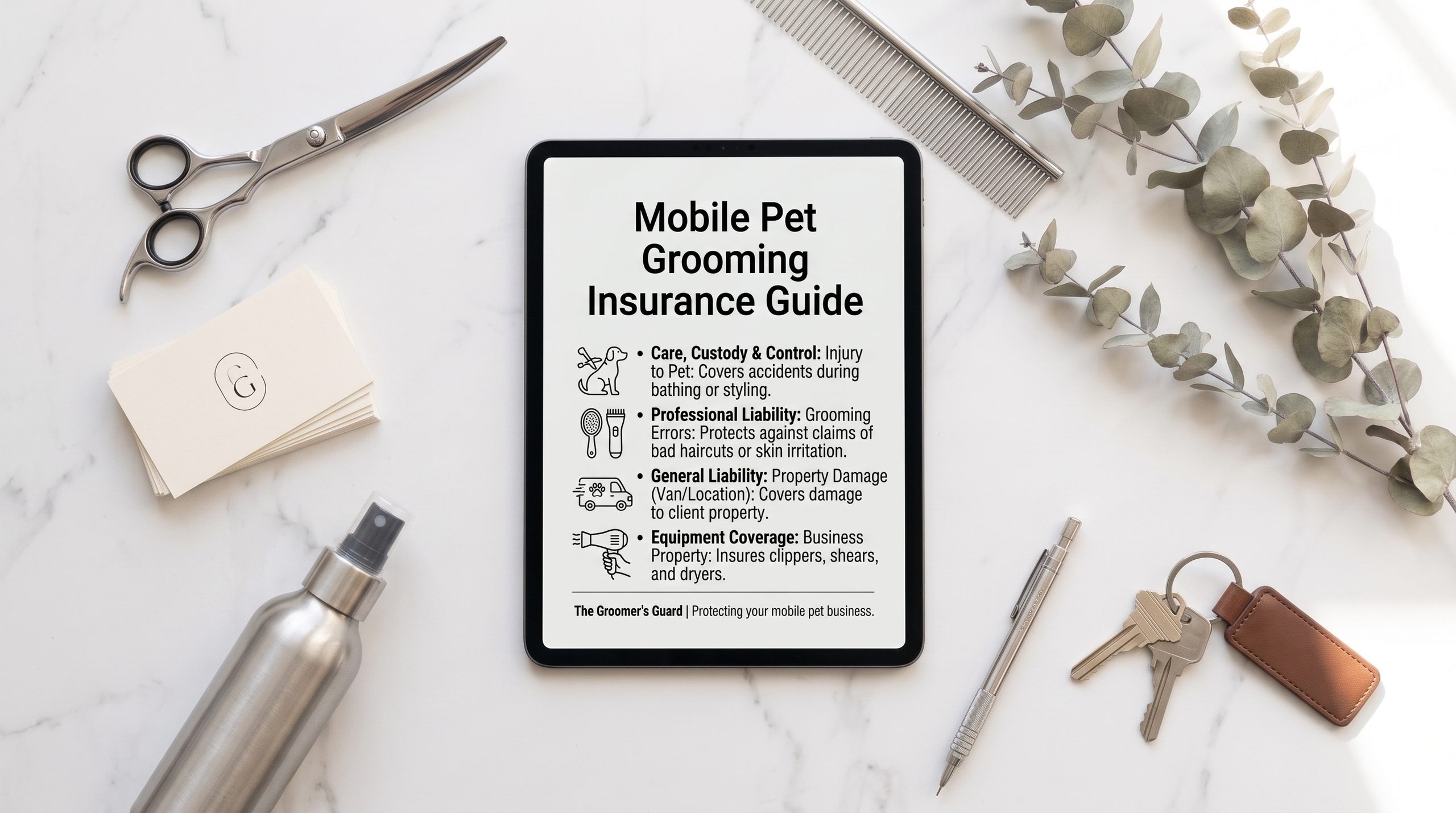
Mobile grooming adds a layer of risk that a fixed-location groomer never deals with: a van full of expensive equipment, hours spent driving between client homes, and a workspace that changes every appointment. A standard grooming policy built for a shop simply wasn’t designed for that. Here’s what actually needs covering when the business is on wheels.
Why Mobile Grooming Needs Its Own Coverage Shape
A grooming policy built for a fixed shop assumes a stable location: a lease to insure, a storefront customers walk into, equipment that stays put. Mobile grooming flips nearly all of that around — your “shop” is a vehicle, your equipment travels with you, and every appointment happens on a different client’s property. That difference matters enough that a generic small business or even a standard pet-care policy often leaves real gaps unless it’s specifically built around mobile operations.
The Core Coverage Types
General liability
Covers third-party claims for bodily injury or property damage connected to your grooming operations — a client tripping over your equipment, or damage caused to a client’s driveway or home while setting up.
Animal bailee / care, custody, and control coverage
As a groomer, you take direct physical custody of a pet for the duration of the appointment — clipping nails near sensitive skin, lifting animals onto a table, using equipment that can startle or injure. This coverage protects against injury, illness, or death to an animal while it’s in your care, and — much like pet sitting — is one of the most important pieces of the whole policy, since it addresses the exact risk your service revolves around. Real claims illustrate why: a dog leaping off a grooming table has led to leg injuries requiring thousands of dollars in surgery and rehabilitation, a scenario animal bailee coverage is specifically built to respond to.
Professional liability (errors and omissions)
Covers claims that your professional service — not just an accident — caused harm: a nick during a routine trim, a skin reaction to a product used, or a cut that leads to a client seeking compensation for vet bills and, in some cases, emotional distress. This is distinct from general liability, which responds to accidents, not mistakes in professional judgment.
Commercial auto insurance
This is where mobile grooming diverges most sharply from a shop-based business. Your van isn’t just a vehicle — it’s your workspace, your equipment storage, and often a significant capital investment. Commercial auto coverage protects against accidents involving your vehicle, and — critically — a standard personal auto policy will not cover a vehicle used for business purposes, regardless of how it’s registered.
Mobile equipment and vehicle customization coverage
Beyond basic auto liability, mobile groomers typically need coverage for the vehicle’s customization (grooming stations, water systems, generators) and the equipment inside it — clippers, tables, dryers, and supplies — which standard auto policies often don’t extend to.
Loss of business income for your vehicle specifically
Worth flagging because it’s a common blind spot: a standard business owner’s policy’s business interruption coverage typically does not extend to loss of income caused by damage to your mobile unit specifically. If your van is out of commission after an accident or theft, you may need a distinct add-on to cover the resulting lost income, separate from your general business interruption coverage.
Real Risk Patterns Worth Knowing
- Vehicle theft. A parked grooming van, sometimes left briefly outside a client’s home, is a real theft target given the value of equipment inside — commercial auto coverage is what responds if the vehicle and its contents are stolen.
- Grooming-related injuries. Cuts, burns, or allergic reactions during a routine trim are among the most common claims, and are precisely why both general liability and professional liability matter together, not just one or the other.
- Fire and vehicle damage. Mobile units carry water systems, generators, and electrical equipment in a confined space — a real fire risk that commercial auto and vehicle-specific property coverage are built to address.
What to Ask Before You Buy
- Is animal bailee/CCC coverage included by default, or a separate add-on? Confirm the specific limit, since severe injuries can exceed a low default quickly.
- Does the policy cover the vehicle’s customization and interior equipment, not just standard auto liability?
- Is there a distinct loss-of-income provision for the mobile unit, separate from a general BOP’s business interruption coverage?
- Does workers’ compensation apply if you employ any additional groomers or drivers?
- Work with an agent who specifically understands mobile pet grooming — a generalist agent unfamiliar with the industry is one of the most common reasons groomers end up underinsured in exactly the areas that matter most.
This article is for general informational purposes only and does not constitute insurance, legal, or financial advice. Insurance coverage, requirements, and costs vary by state, country, insurer, and individual business circumstances. Always confirm your specific coverage needs directly with a licensed insurance agent or broker before making a purchasing decision.
Leave a Reply