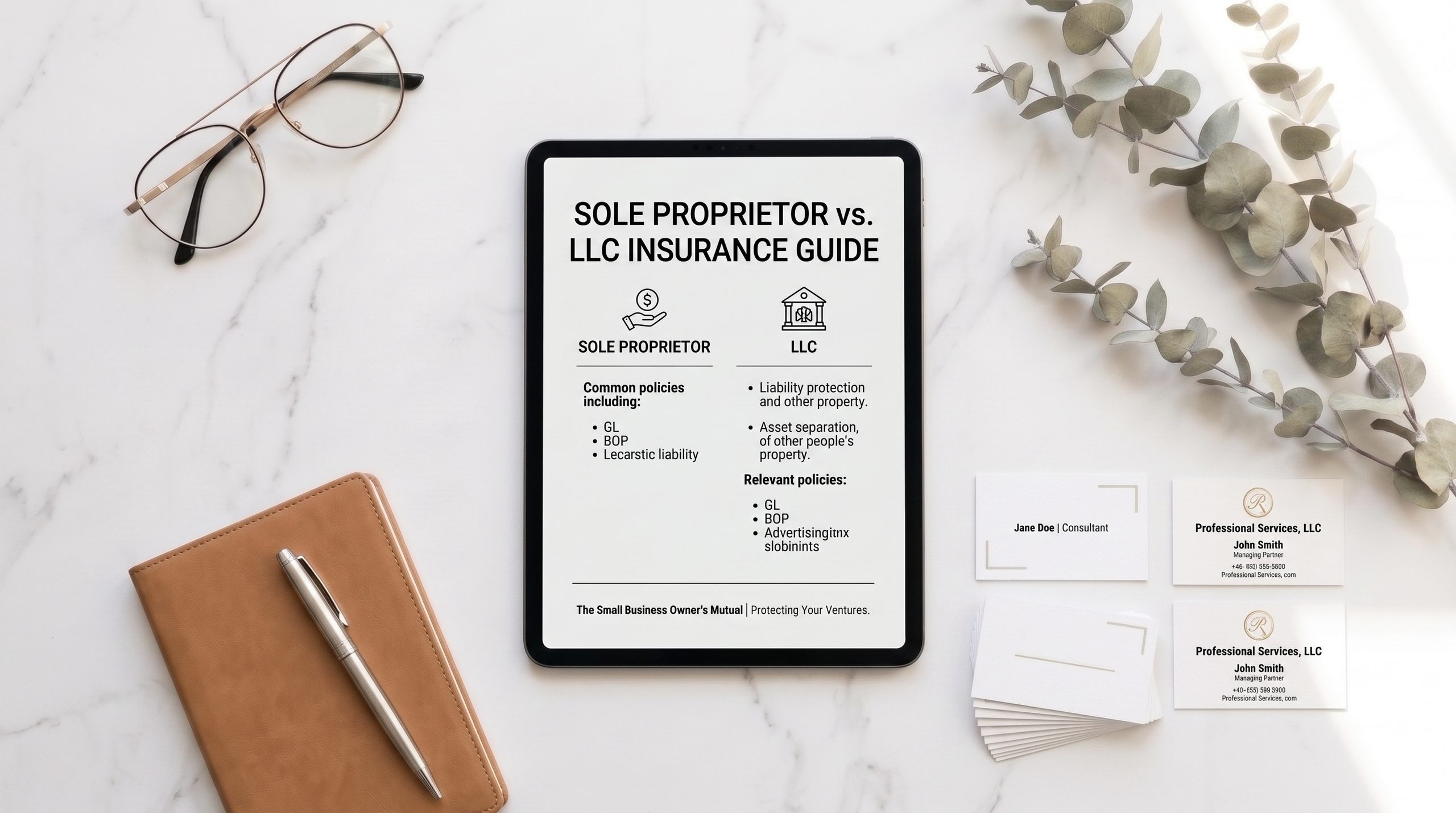
It’s a common assumption: form an LLC, and your personal assets are safe, so insurance becomes optional. It’s also wrong in an important way. An LLC and business insurance solve two different problems, and understanding that difference is what actually determines how much protection you need — regardless of which structure you’ve chosen.
The Core Difference: Structure vs. Protection
A business structure (sole proprietorship or LLC) determines whether your personal and business assets are legally separate. Insurance is a financial tool that helps cover the cost of claims, lawsuits, and losses when something goes wrong. They’re not substitutes for each other — they solve different problems, and most businesses genuinely need both.
Sole proprietorship
The default structure for anyone running a business without filing separate formation paperwork. It’s simple to set up, but it comes with unlimited personal liability — your business and personal assets are legally the same thing. If your business is sued or accumulates debt, your personal savings, home, and other assets can be pursued to satisfy the claim.
LLC (Limited Liability Company)
A formally registered business entity, legally separate from you as an individual. This separation means that, in most circumstances, creditors and plaintiffs can only pursue the LLC’s business assets — not your personal home, savings, or investments.
Why an LLC Doesn’t Make Insurance Optional
This is the part that trips people up. An LLC’s liability protection is real, but it has real limits:
- It doesn’t protect you from your own negligence. If you personally cause harm through your professional services or actions, plaintiffs can often pursue both the LLC’s assets and your personal assets — the LLC shield doesn’t cover your own acts, only the business’s separateness from you as a person.
- Courts can “pierce the corporate veil.” If you mix personal and business finances or don’t maintain basic business formalities, a court can disregard the LLC’s separation entirely, exposing your personal assets anyway.
- The LLC’s own assets still need protecting. Even with liability protection intact, a lawsuit or claim can wipe out the LLC’s own assets — your inventory, equipment, bank balance, and future income — without insurance in place to absorb that cost.
- Insurance and legal structure address different moments. An LLC limits whose assets are exposed after a judgment. Insurance helps prevent that judgment from bankrupting the business in the first place, by paying for legal defence, settlements, and claims before they ever threaten either side of the ledger.
Why Sole Proprietors Often Need Insurance Even More
Precisely because a sole proprietorship offers no legal separation, insurance becomes the only layer of protection between a claim against the business and your personal finances. Without a policy in place, the business owner is fully and personally responsible for any claim the business can’t otherwise cover — there’s no LLC structure standing between the lawsuit and your personal savings.
This is why insurance is often described as doing more real-world protective work for a sole proprietor than for an LLC — not because LLCs don’t need it, but because sole proprietors have nothing else standing behind them if coverage falls short.
What Actually Changes Between the Two
In practice, the types of insurance both structures typically need are nearly identical:
- General liability insurance — for third-party injury or property damage, regardless of structure
- Professional liability (E&O) insurance — if the business provides a service or professional judgment
- Commercial property insurance — for a business’s equipment, inventory, or physical location
- Workers’ compensation — required in most states the moment either structure hires an employee
What genuinely shifts is less about coverage type and more about a few secondary considerations:
- LLCs sometimes appear more established to clients and commercial partners, which can occasionally make it easier to win contracts or bids that specifically request a formally organized vendor — separate from insurance requirements, but often requested alongside them.
- Sole proprietors may want to consider a personal umbrella policy extending beyond standard business coverage, since there’s no legal firewall protecting personal assets if a claim exceeds a standard policy’s limits.
- LLC owners should be especially careful about commingling finances, since sloppy recordkeeping is one of the most common ways courts justify piercing the liability shield in the first place — insurance doesn’t fix that risk; clean business practices do.
The Bottom Line
Neither structure is a substitute for the other. An LLC limits which assets a claim can reach; insurance limits how much a claim costs in the first place — and ideally keeps it from reaching either side of that line at all. Choosing a business structure is a legal and tax decision worth making with proper advice; choosing insurance coverage is a separate decision that applies regardless of which structure you land on.
This article is for general informational purposes only and does not constitute insurance, legal, or financial advice. Insurance coverage, requirements, and costs vary by state, country, insurer, and individual business circumstances. Always confirm your specific coverage needs directly with a licensed insurance agent or broker before making a purchasing decision.
Leave a Reply